
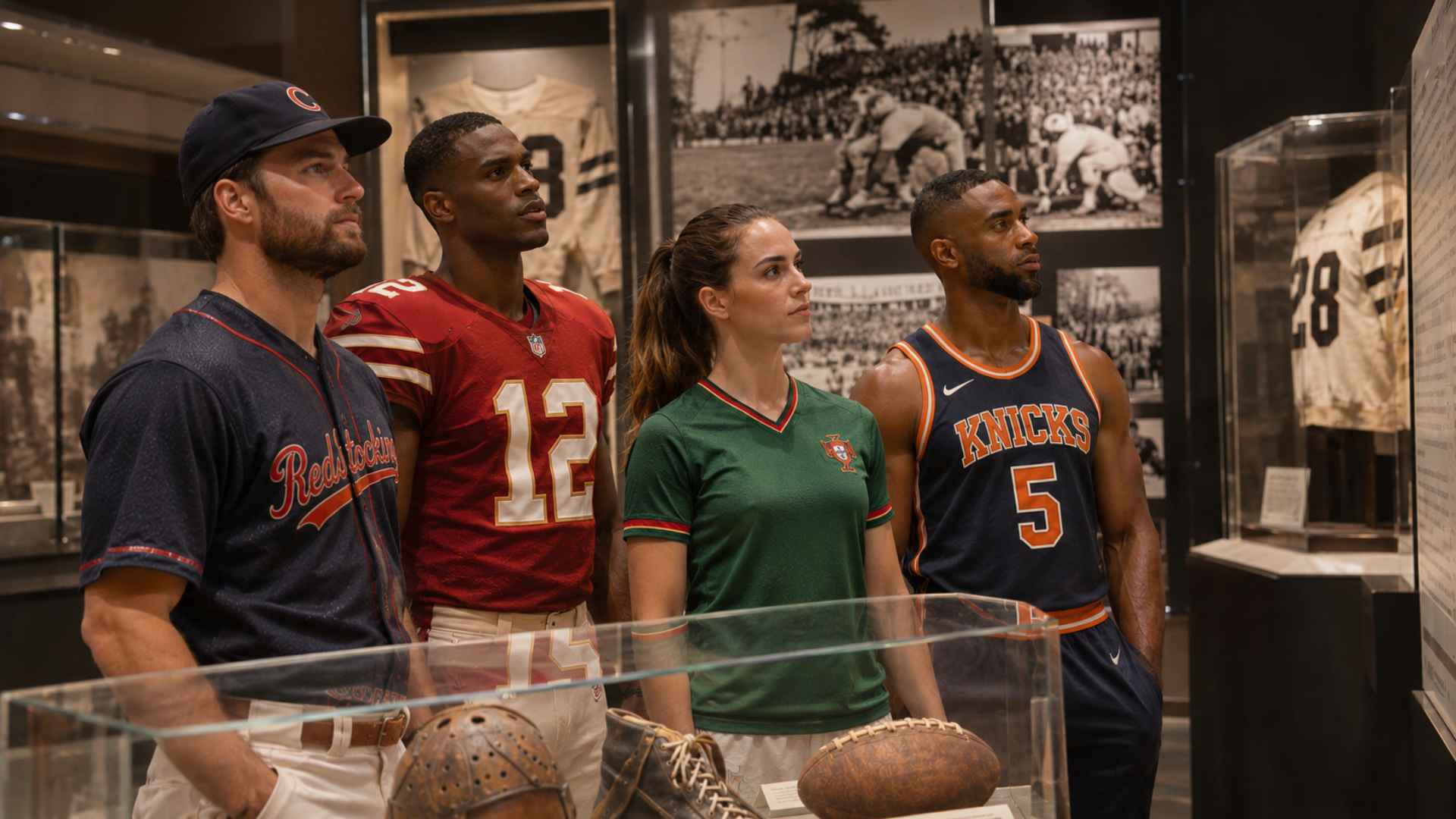
American football uniforms have always been more than clothing worn during a game. They represent a team’s history, personality, and connection with its supporters. From the early days of football to today’s professional competitions, uniforms have changed alongside the sport itself. Different colors, numbers, helmets, and logos have helped teams create recognizable identities that remain important both on and off the field.
The development of American football uniforms also reflects changes in technology, player safety, and sports culture. Early uniforms were designed mainly for practical purposes, while modern designs combine comfort, protection, and visual appeal. Understanding this history shows how something as simple as a jersey can become an important part of a team’s identity and tradition.
The Early History of American Football Uniforms And Their Development
American football began taking shape during the late nineteenth century, influenced by earlier forms of rugby and soccer. In its early years, players wore heavy wool jerseys, long pants, and basic protective equipment. Uniform designs were not particularly stylish because the main concern was allowing players to participate in the game. Teams gradually began using different colors to make it easier to recognize players from opposing sides, especially as organized competitions became more common.
As football grew in popularity during the early twentieth century, uniforms started becoming more standardized. Numbered jerseys helped officials, coaches, and spectators identify individual players. Leather helmets also became more common as awareness of head injuries increased. Although early protective equipment offered limited protection compared with modern standards, these developments marked an important step in making football uniforms more practical and organized.
How Uniform Colors And Logos Build Strong Team Identity
Team colors are among the most recognizable elements of American football. Many professional and college teams use specific color combinations that have remained part of their identity for decades. These colors help supporters recognize their favorite teams instantly, whether they are watching a live game, following a television broadcast, or wearing team merchandise. Over time, familiar colors become closely connected with memorable victories, legendary players, and important moments in a team’s history.
Logos, jersey numbers, and helmet designs also contribute to a team’s visual identity. The helmet is especially important because it provides a highly visible space for displaying team symbols. Some organizations maintain traditional designs to respect their history, while others introduce updated graphics and alternate uniforms to create a fresh appearance. These visual elements help establish a consistent image that connects players, supporters, and different generations of football fans.
The Evolution Of Modern Football Uniform Design And Technology
Modern American football uniforms look very different from those worn by players in the early twentieth century. Advances in fabric technology have allowed manufacturers to replace heavy materials with lightweight synthetic fabrics. Polyester and other performance materials are widely used because they can help manage moisture, improve comfort, and support movement during intense physical activity. Modern jerseys are also designed with closer fits to reduce unnecessary fabric that opponents might grab during a tackle.
Protective equipment has developed alongside uniform materials. Today’s players wear specially designed helmets, shoulder pads, and other protective gear intended to reduce the risk of certain injuries. Helmet technology has improved through changes in shell construction, padding, and fitting systems. However, no helmet can completely prevent concussions or eliminate the dangers of football. Uniform development therefore involves balancing player mobility, comfort, protection, and the physical demands of the sport.
Another important development is the introduction of alternate uniforms and special game day designs. Professional and college football teams sometimes use different combinations of jerseys, pants, and helmets for selected matches. These designs may celebrate historical achievements, recognize important anniversaries, or reflect a particular school or regional tradition. The National Football League has also introduced uniform rules and equipment standards to maintain consistency across its competitions. As a result, modern football uniforms combine historical influences with changing design preferences and technical requirements. The connection between uniforms and team identity remains strong despite all these changes. Supporters often associate particular jerseys with championship seasons, famous players, and unforgettable games.