
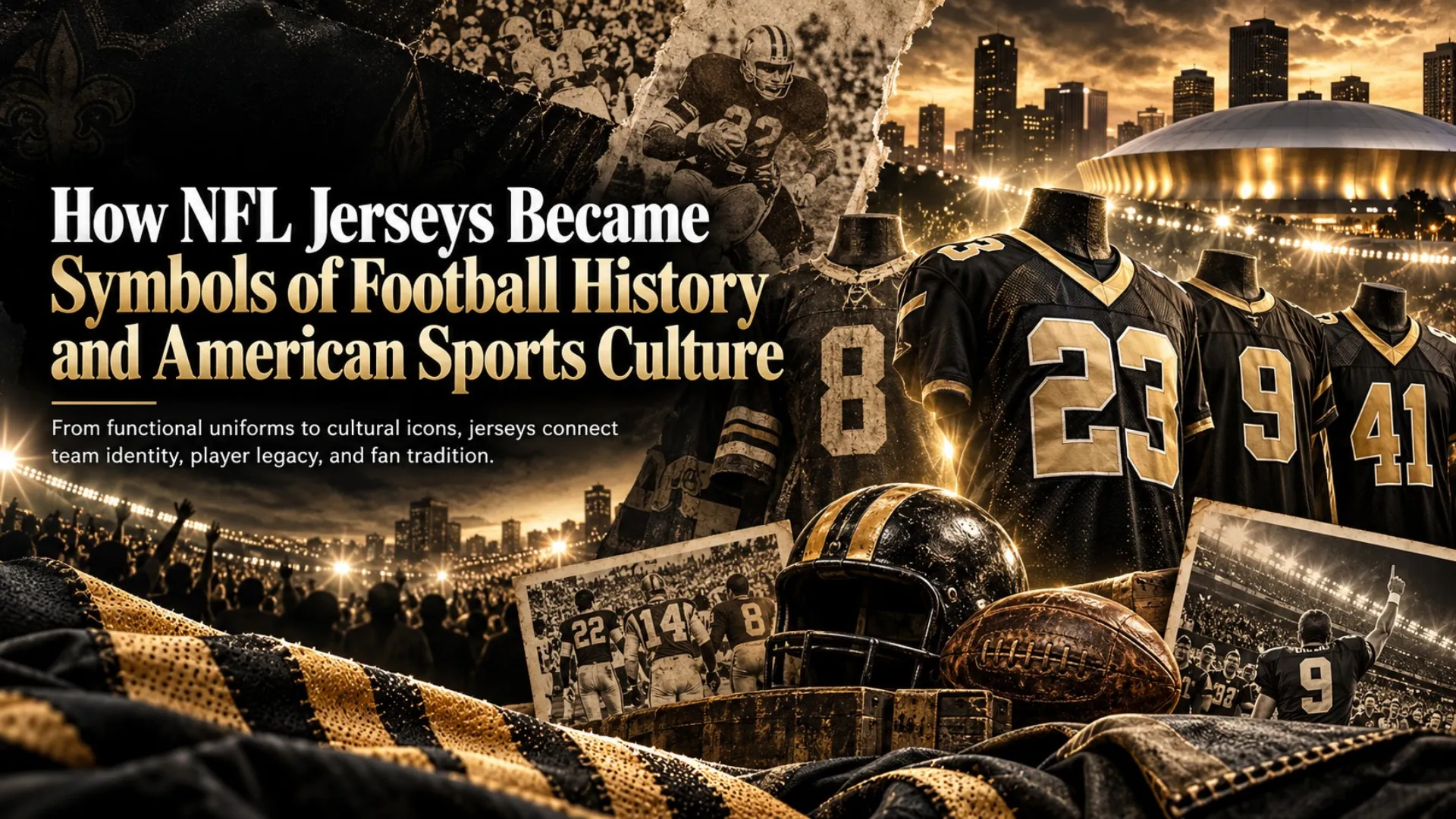
In professional football, a jersey began as part of a uniform but gradually became a familiar sign of team allegiance. Its purpose on the field is practical: it distinguishes players, displays numbers, and contributes to an organized team appearance. Away from the field, the same visual elements allow supporters to recognize athletes and share a connection to the sport. This relationship developed as professional football expanded through broadcast media, stadium attendance, and national interest. The National Football League traces its beginning to 1920, when it was established under the name American Professional Football Association. More than a century later, the league’s team colors and jersey numbers remain widely recognizable features of American sports culture.
Football jerseys also show how sporting traditions can enter everyday life without losing their original meaning. A particular design may remind someone of a relative, a hometown, a memorable season, or the first game they attended. Different generations can associate the same team colors with very different rosters and experiences. Some fans value current uniforms, while others are interested in historically inspired patterns or older player numbers. These preferences illustrate how sports apparel carries both personal and collective memories. Looking at the history of jersey design helps explain why this simple garment has become a lasting cultural symbol.
How Football Uniforms Changed Over Time
Early American football uniforms were designed for competition rather than everyday wear. They generally used heavier materials than many modern sports garments, and the overall appearance was shaped by the protective equipment of each period. As the sport developed, teams adopted clearer numbering systems to make players easier to identify. Changes in helmet design, shoulder protection, and fabric technology also affected the appearance and fit of uniforms. By the middle of the twentieth century, increasingly widespread television coverage made team colors and player numbers more visible to audiences beyond stadiums. Uniform design consequently served both the practical needs of athletes and the visual needs of spectators.
Contemporary player uniforms are developed with movement, fit, and the demands of the sport in mind. Many modern jerseys use synthetic fibers, while different garment constructions place emphasis on factors such as ventilation, stretch, and durability. Retail versions often adapt a team’s visual design for everyday comfort rather than duplicating the construction of game-worn equipment. This distinction explains why two jerseys featuring the same name and number can have different sleeve shapes, fabrics, and methods of applying graphics. Details also change as manufacturers release new product generations. For historians and collectors, these variations can help identify when a garment was produced and what type of use it was designed for.
Why Player Numbers Become Part of Sporting Memory
Numbers have been essential to organized football because they help officials, commentators, and spectators identify players. The NFL has traditionally linked eligible number ranges to player positions, although those rules have been revised over time. Fans often remember a significant athlete by number as quickly as by name. That association can become especially strong when a player remains with one franchise for many seasons. A number can recall a specific game-winning play, postseason appearance, or outstanding season. Even after a roster changes, past player numbers may remain part of conversations about the team’s history.
Numbers also provide a way to understand the relationship between an individual career and a larger team tradition. Two players from different eras may represent very different periods even when they wear similar uniform designs. Official team rosters and historical game records provide context for connecting names and numbers to the correct seasons. That context matters because jersey numbers can be reassigned or become unavailable due to a team’s decisions. A photograph of an old jersey is therefore most meaningful when its date and player identification are known. The combination of reliable records and visual details can turn an ordinary garment into a useful historical reference.
Team Colors, Local Identity, and the Stadium Experience
Professional teams frequently draw on symbols that are familiar to their surrounding communities. Names, colors, and emblems can evoke a city’s history, geography, or longstanding public traditions. In New Orleans, the fleur-de-lis has historical associations that extend well beyond the Saints and professional sports. Its presence on Saints helmets is one example of a broader local symbol appearing in a team identity. Similar relationships exist across sports, although each franchise has developed its own visual language. These connections help explain why certain uniforms are recognizable even when an athlete’s name is not visible.
Stadium gatherings make team colors particularly visible because many people display the same symbols in one shared place. Jerseys are frequently worn with ordinary clothing, which makes them practical for both sporting events and casual settings. The experience of wearing a team color can be social rather than purely individual. Families and groups of friends may treat game-day clothing as part of an established routine. Television broadcasts and photography allow those visual traditions to be seen by people who are not attending in person. Over time, repeated shared experiences can strengthen the association between a team uniform and a community.
Why Throwback Designs Continue to Matter
Throwback uniforms revisit designs associated with earlier chapters of a team or league. They may feature older striping patterns, lettering, number styles, or color combinations. In some cases, a throwback recreates the general appearance of a historical uniform rather than reproducing every original material. That difference is important because manufacturing methods and equipment standards have changed substantially over time. A modern throwback should therefore be understood as a historical interpretation unless its production details establish otherwise. Its main cultural value lies in connecting current audiences with visual elements from the past.
Historical designs also make changes in professional football easier to see. A comparison of uniforms from different decades can reveal shifts in typography, logo placement, sleeve structure, and overall fit. Some changes follow broader developments in sportswear manufacturing, while others reflect decisions made by individual teams. Looking closely at those details may help identify the period represented by a jersey. It can also encourage interest in photographs, game footage, and documented team history. For this reason, throwback apparel occupies a space between contemporary sports fashion and historical remembrance.
How to Evaluate and Care for a Football Jersey
Evaluating a jersey begins with identifying what it actually represents. The team, player, number, approximate season, and garment category provide useful starting information. Labels and documented product specifications can help explain its construction, but a familiar logo alone is not evidence of authenticity. Measurements are also important because jersey size and cut can differ across manufacturers and model years. Two garments with the same labeled size may fit differently, especially when one has a loose fan-oriented cut and another follows a more structured design. A careful assessment considers construction and context rather than relying only on appearance.
Jersey care should follow the instructions attached to the garment because decorations and fabrics respond differently to cleaning. In general, minimizing excessive heat and abrasion can help protect printed names, numbers, and other applied details. Turning a garment inside out before washing may reduce direct friction on its decorated surfaces when permitted by the care label. Air drying can sometimes be preferable for delicate graphics, but the manufacturer’s instructions should take priority. For older or collectible items, condition and material stability may justify a more cautious approach than routine machine washing. Thoughtful maintenance helps preserve the information, appearance, and personal memories carried by a football jersey.